



(By Qurat ul Ain Ali Khawaja)
“A Cultural Invitation Amid a Strategic Freeze”
ISLAMABAD: India’s invitation to Pakistan’s Federal Minister for National Heritage and Culture, Aurangzeb Khan Khichi, to attend the inaugural Shanghai Cooperation Organisation (SCO) Civilisational Dialogue Forum in New Delhi from November 20 to 22, 2026, has opened a potential avenue for cultural engagement amid persistent bilateral tensions. Scheduled at the historic Purana Qila, the forum aims to bring together representatives of SCO member states and invited partners to explore the historical and cultural connections linking Asian and Eurasian societies.
The invitation carries significance beyond cultural diplomacy. If Minister Khichi attends, it would mark the first visit by a Pakistani minister to India since Bilawal Bhutto Zardari’s participation in the SCO foreign ministers’ meeting in Goa in May 2023, and the first such ministerial engagement since the May 2025 military confrontation associated with Operation Sindoor. Pakistan has yet to confirm its participation.
The invitation should therefore be viewed as an opportunity for engagement, not evidence of an imminent diplomatic breakthrough. The central question remains whether cultural dialogue can create space for communication where conventional bilateral diplomacy has struggled.
The SCO: A Multilateral Channel Amid Political Differences
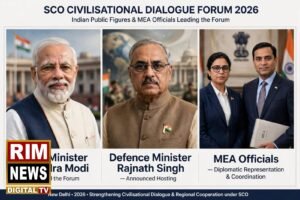
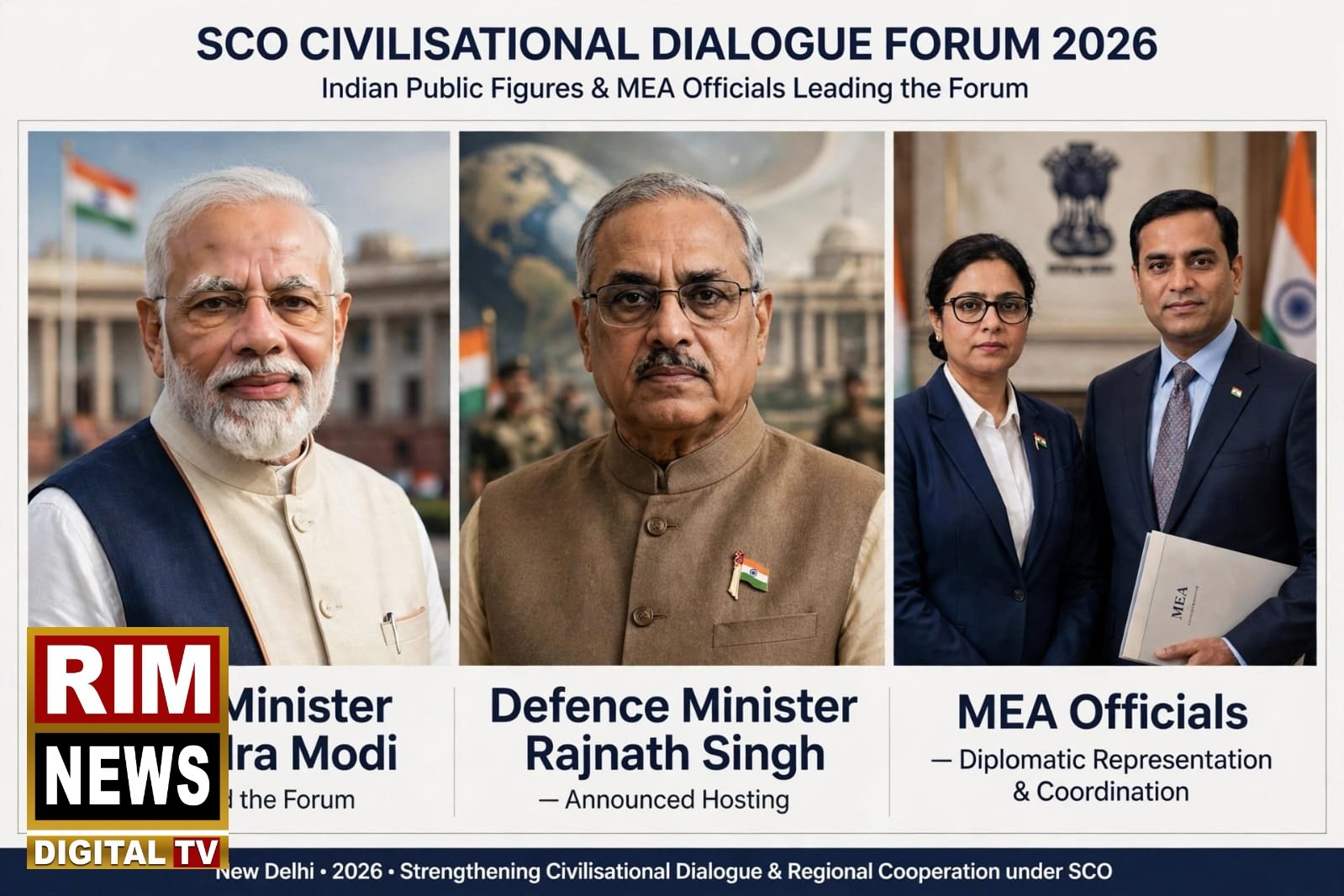
Proposed by Indian Prime Minister Narendra Modi at the SCO summit in Tianjin in September 2025, the forum reflects an effort to place civilisational exchange within the organisation’s broader agenda. India’s Ministry of Culture and Ministry of External Affairs are jointly organising the event, with invitations reportedly extended across the SCO’s membership and wider diplomatic network.
India has described the invitations as consistent with established multilateral practice. This distinction is important: inviting Pakistan does not necessarily signal a change in New Delhi’s bilateral policy. Rather, it illustrates how institutional engagement can continue despite political disagreements.
The SCO has preserved opportunities for official contact, including Indian External Affairs Minister S. Jaishankar’s visit to Islamabad for the organisation’s October 2024 meeting. Such engagements demonstrate that multilateral cooperation and bilateral reconciliation are separate processes. The former can continue without resolving the latter. The Civilisational Dialogue Forum could provide another channel for maintaining communication while allowing both countries to retain their established diplomatic positions.
Purana Qila: Heritage as an Instrument of Diplomacy
The choice of Purana Qila introduces historical symbolism into the initiative. Associated with Delhi’s Mughal-era heritage, the sixteenth-century fort represents architectural traditions and historical developments that extend beyond contemporary political boundaries.
For India, the venue offers an opportunity to project its cultural heritage and international influence. For participating countries, it provides a setting to discuss shared histories beyond immediate geopolitical rivalries. However, heritage diplomacy is not politically neutral. Historical monuments can strengthen national identity, shape international perceptions and advance cultural influence. The forum’s success will consequently depend less on ceremonial language than on whether it encourages inclusive discussion and practical cooperation.
Shared heritage may establish common ground, but a historic setting cannot independently resolve modern disputes.
Pakistan’s Strategic Calculus: Reciprocity and National Interest
For Islamabad, the invitation presents a diplomatic decision requiring careful assessment. Pakistan’s role in the SCO’s institutional processes and preparations for its forthcoming 2027 summit makes continued multilateral engagement particularly relevant.
Participation could reinforce Pakistan’s commitment to regional cooperation and demonstrate that disagreements need not prevent engagement in every field. It could also preserve professional channels ahead of future SCO meetings, when representatives of both countries may again interact under the organisation’s framework. Nevertheless, diplomatic reciprocity should not be confused with political concession. Attendance would not constitute an endorsement of India’s position on Kashmir or imply progress towards resolving outstanding disputes. Pakistan could participate while maintaining its established positions on sovereignty, security and the rights of the Kashmiri people.
A carefully prepared delegation could advocate cultural preservation, academic exchanges, historical documentation and youth engagement. The objective should be neither symbolic confrontation nor unconditional accommodation, but a decision grounded in measurable benefits and national priorities.
Shared Civilisational Heritage: Beyond Political Boundaries
South Asia’s historical connections offer substantial opportunities for cultural cooperation. The Indus Valley Civilisation, Persian and Urdu literary traditions, Sufi poetry, shared musical forms and architectural influences demonstrate centuries of interaction among communities across the region. The works associated with Lal Shahbaz Qalandar, Bulleh Shah and Amir Khusrau continue to resonate across contemporary national boundaries. Their intellectual and spiritual legacies provide opportunities for joint scholarship, translation projects and cultural preservation. Museums, universities and heritage institutions could collaborate through digital archives, archaeological research, exhibitions and academic exchanges. Such initiatives would enable younger generations to explore regional history through documented evidence rather than political stereotypes.
Yet shared history should not be romanticised as a substitute for political understanding. Its value lies in creating opportunities for respectful engagement while recognising differences in national identity, historical interpretation and political experience.
The Limits of Cultural Diplomacy
India and Pakistan continue to face serious disagreements, including the Kashmir dispute, security concerns and competing interpretations of regional developments. A cultural forum cannot resolve these issues, nor can participation alone establish mutual trust.
The danger is that civilisational dialogue becomes an exercise in public diplomacy without measurable outcomes. To avoid this, the initiative should encourage practical commitments, institutional follow-up and continuing professional exchanges.
Pakistan should assess whether participation advances its diplomatic interests without compromising its principles. India should demonstrate that its outreach extends beyond ceremonial invitations. The SCO, meanwhile, must establish whether cultural cooperation can contribute meaningfully to regional stability.
Five priorities could strengthen the forum’s longer-term value: heritage preservation, academic partnerships, youth exchanges, responsible cultural tourism and regular institutional consultations. These measures would provide tangible benchmarks beyond attendance figures and diplomatic photographs.
Conclusion: From Symbolism to Substantive Engagement
India’s invitation presents a limited but potentially meaningful opportunity to maintain multilateral contact during a period of strained bilateral relations. Its significance will depend on how both governments approach the initiative and whether cultural engagement generates practical cooperation.
As the traditional saying suggests, “Jab siyasat ke darwaze band hon, to tehzeeb ki khidki khuli reh sakti hai”—when political doors close, the window of culture may remain open. But an open window is not an open door. Cultural diplomacy can preserve communication and soften perceptions; it cannot replace political will, accountability or the resolution of outstanding disputes.
The real test will be whether shared heritage produces sustained engagement, whether engagement builds confidence, and whether confidence creates room for a more constructive regional relationship.
Politics may divide nations, but history can still offer them a language in which to speak. Whether that language becomes a bridge to peace depends on the choices governments make today.