




Reforms in industrial tariffs, low-carbon transition deemed crucial for export competitiveness and access to global markets.
Experts at an SDPI dialogue emphasized the need for a coherent policy to align the Pakistani industry with global carbon requirements.
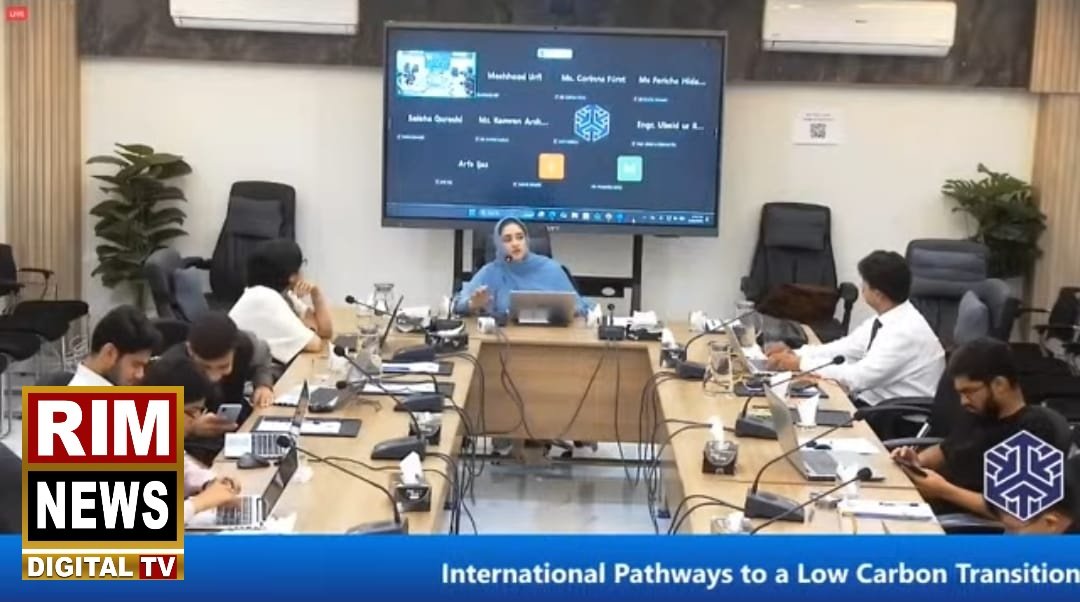
Islamabad (Staff Reporter) Experts have urged the need for reforms in gas and electricity markets, rationalization of industrial tariffs, and the development of a clear decarbonization roadmap for challenging industrial sectors like cement, steel, and textiles to transition towards a low-carbon economy. During an international webinar titled ‘International Pathways for Low-Carbon Transition in Difficult Sectors’ organized by the Sustainable Development Policy Institute (SDPI), experts stated that decarbonization has now become not just an environmental necessity but a crucial requirement for exports, industrial competitiveness, and access to global markets. SDPI energy expert Dr. Khalid Waleed emphasized the need to make the electricity market free and competitive and fully implement CTBCM, stating that this would provide industries with opportunities to purchase renewable energy directly. He also highlighted distributed solar, battery storage, and virtual power plants as significant for industrial decarbonization, while identifying financing as a major challenge. Corina First from the International Network of Energy Transition Think Tanks (INET) reported that INET’s network includes 32 think tanks from 25 countries, and SDPI has been selected as one of six institutions from Latin America, South America, and South and Southeast Asia that are developing practical frameworks for carbon reduction in their respective countries. Discussing Pakistan’s situation, SDPI researcher Arfa Ijaz noted that carbon reduction in industries is no longer just an environmental issue but has become a significant factor for global trade, export competitiveness, and access to investment. She mentioned that Pakistan’s textile sector, which is the largest source of the country’s exports and accounts for nearly 57 percent of total exports, is particularly facing increasing pressure from carbon border adjustments due to its reliance on European markets. There are also concerns that the preferential trade facility under GSP+ may be affected. Representing the industry, Asim Riaz, energy advisor of the All Pakistan Textile Mills Association (APTMA), stated that there is effective potential for carbon reduction through cogeneration in the textile industry; however, the imbalance in gas and electricity rates and recent tariff increases have impacted its economic viability. Faricha Hidayat from the World Resources Institute Indonesia noted that Indonesia’s net-zero roadmap includes nine industrial sectors, including cement, steel, and textiles, which will require approximately $290.5 billion in investment for decarbonization from 2025 to 2050. Sabiul Najib from Carbon Craft emphasized the need for a unified global voice and better representation for the Pakistani textile industry, stating that the industry is spending an extraordinary amount of time on compliance audits. Mashood Urfi from Alternative Development Services urged reforms in industrial electricity rates, marginal pricing, and a phased elimination of cross-subsidies, warning that carbon reduction efforts should not impose new financial burdens on the industry. Muqaddas Ashiq from the Policy Research Institute for Equitable Development identified obstacles in the electricity transmission and distribution system as significant barriers to industrial decarbonization. In concluding remarks, Engineer Obaidur Rahman Zia stated that experts agree that Pakistan needs a coherent energy policy and a clear decarbonization roadmap tailored to the needs of each industrial sector. He mentioned that SDPI is also working with the government on industrial policy, hydrogen policy, and broader economic reforms.