






Rising crude oil prices nearing $100 per barrel signal alarm for the global economy, Aatif Ikram Sheikh
The increase in oil prices in the global market is likely to put further pressure on Pakistan’s import bill, said the President of FPCCI.
The government must take immediate and effective measures to control energy prices and business costs, according to a statement on the economic situation.
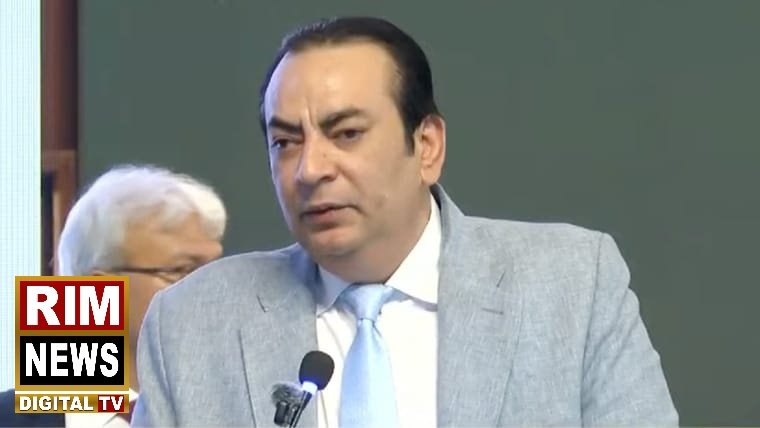
Islamabad (Special Correspondent) – Aatif Ikram Sheikh, President of the Federation of Pakistan Chambers of Commerce and Industry (FPCCI), expressed deep concern over the escalating tensions in the region and their potential impacts on the global and national economy, stating that the continuous rise in global oil prices is a serious concern for the business community. In his statement, Aatif Ikram Sheikh said that crude oil prices approaching $100 per barrel are a warning bell for the global economy. The increase in oil prices in the global market is likely to put further pressure on Pakistan’s import bill, which could negatively affect the national economy and business activities. The FPCCI President urged the government to take immediate and effective measures to control energy prices and business costs. He stated that expensive energy could lead to an increase in production costs for domestic industries, which may affect the export competitiveness of Pakistani products. He noted that ongoing tensions in the region could lead to increased costs in global trade, shipping, and insurance, while disruptions in the supply chain could create new challenges for the global economy. The tensions between the U.S. and Iran, along with Houthi attacks on Saudi Arabia, pose a risk to global trade and the supply chain. Aatif Ikram Sheikh mentioned that due to rising tensions in the Middle East, global crude oil prices could exceed $100 per barrel, with more severe impacts on developing economies. He emphasized that Pakistan needs to devise alternative strategies to shield itself from the effects of rising global energy prices. It is crucial to provide more facilities to the private sector to increase exports and reduce import dependency. The FPCCI President stated that the government and the business community must work together to formulate a comprehensive strategy to tackle the energy crisis and global economic uncertainty. In the current situation, economic stability, business continuity, and a conducive environment for industry and trade should be the top priority for Pakistan. He highlighted the new economic challenges faced by the business community due to uncertainty in the global market, stating that peace and stability in the region are essential for promoting trade and economic activities not only in Pakistan but worldwide. All parties should demonstrate restraint and wisdom to reduce tensions and establish peace.