




Notices Issued Over Excessive Fees by Non-Compliant Colleges; Fees and Audited Financial Statements of 35 Approved Institutions Sought
Islamabad (Izhar Khan Niazi):
The National Assembly Standing Committee on National Health Services, Regulations and Coordination has directed immediate measures regarding vacant seats in medical colleges, disparities in fees, institutional oversight and the MDCAT examination.
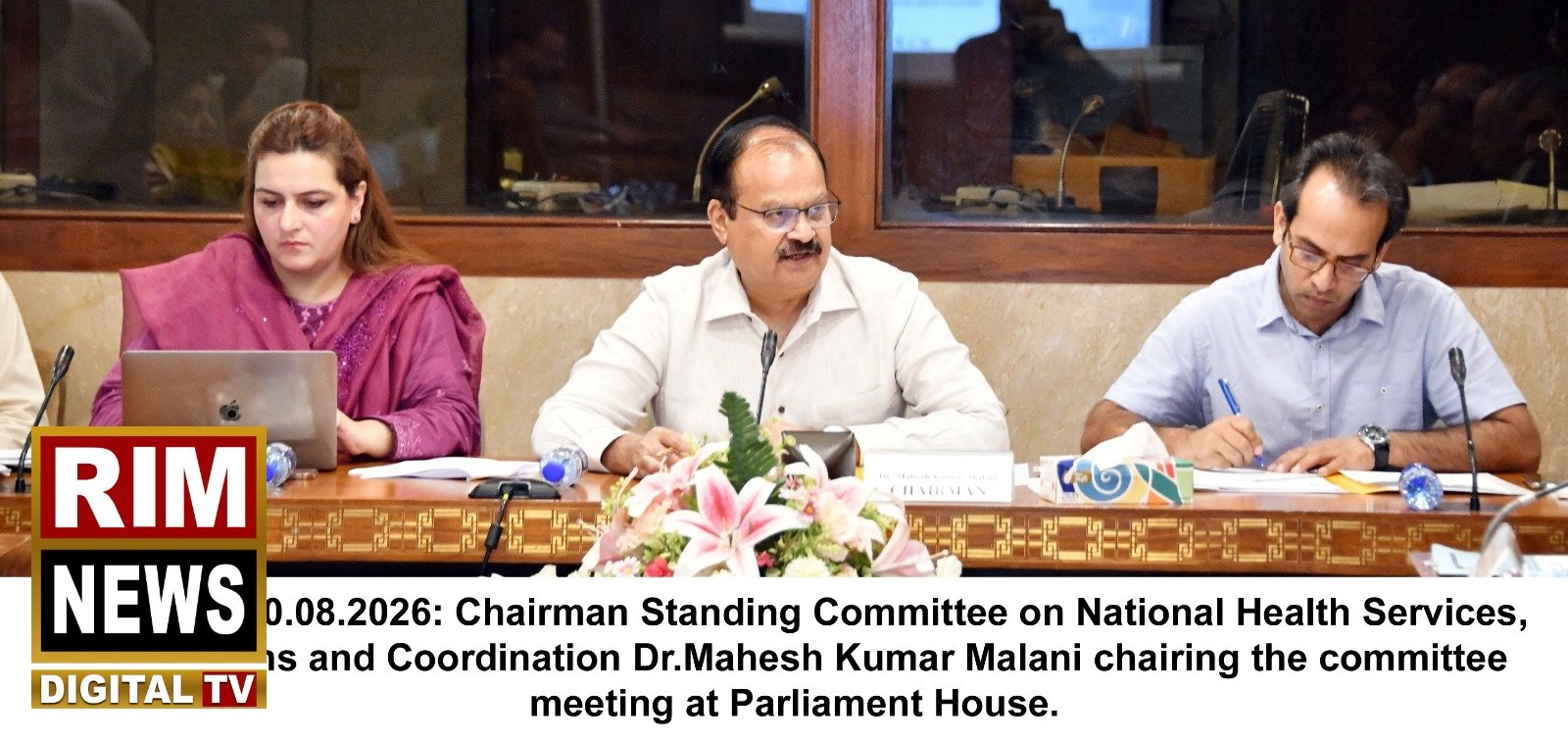
The committee meeting was chaired by Dr. Mahesh Kumar Malani, during which preparations for MDCAT 2026 by the Pakistan Medical and Dental Council (PMDC) were reviewed. The committee was informed that the MDCAT 2026 examination would be held on September 20.
The meeting was informed that out of 61 medical colleges, 35 institutions had met the prescribed standards. The committee sought justification and scrutiny of the fees charged by all these institutions, along with their audited financial statements.
Details were also sought regarding non-compliant institutions allegedly charging excessive fees and displaying such fees on their websites.
The Pakistan Medical and Dental Council informed the committee that notices had been issued to non-compliant institutions and the monitoring process was underway. The committee also sought details of the notices issued.
The committee observed that any increase in fees must be supported by clear criteria and reliable evidence, including educational standards, the number of teaching staff, infrastructure and audited financial information.
Regarding vacant seats in medical colleges, the committee was informed that the issue was broad and could not be attributed solely to fees or the MDCAT qualification rate.
The committee directed that private medical colleges be inspected to determine the reasons behind vacant seats and that a report be submitted within one month.
The committee also considered increasing the number of seats in public-sector medical colleges. The PMDC informed the committee that, following inspections, additional seats had already been allocated for Punjab, former FATA and Balochistan.
Regarding Sindh, it was decided that a separate meeting would be held with the Sindh government and relevant representatives.
Committee Chairman Dr. Mahesh Kumar Malani said institutions that fail to maintain the required standards or consistently have a large number of vacant seats should face appropriate regulatory action. He added that even their approved seats could be reviewed.
The meeting also considered the existing 60 percent eligibility threshold for MDCAT. A proposal to gradually reduce the threshold to increase students’ access to medical education was discussed, while the committee emphasized the need to maintain educational standards.
A proposal to increase the duration of the BDS programme from four years to five years was also considered. The Pakistan Medical and Dental Council informed the committee that appropriate arrangements would be made for students already enrolled in the programme.
The committee also reviewed matters concerning the Pakistan Nursing and Midwifery Council. The meeting was informed that inspections of nursing institutions were ongoing and that a digital system had been introduced to enable inspectors to record information in real time.
A separate complaints portal has also been established, while the licensing process has been digitized.
The committee appreciated these measures and emphasized the need for effective redressal of complaints, including those related to harassment. It was decided that the next meeting would be held at the Nursing and Midwifery Council.
The committee was further informed that work had begun on the Pharmacy Council Bill in light of previous recommendations.
Committee Chairman Dr. Mahesh Kumar Malani said the relevant regulatory bodies were expected to take timely, evidence-based and result-oriented measures concerning vacant seats, institutional inspections, fee regulation and the standard of medical education in the country.