






By Areeba Younis
Date: 29 August 2026
Master’s Programme, School of Economics and Management,
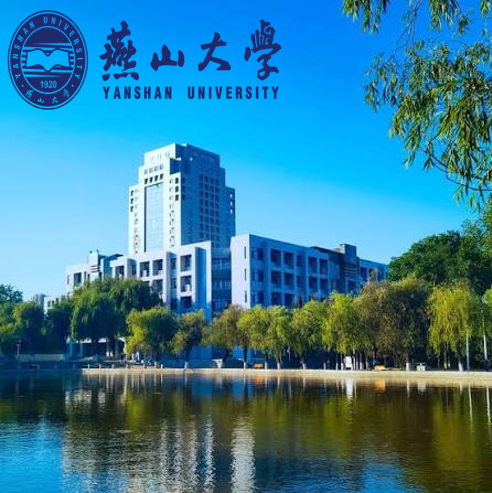
Yanshan University, Qinhuangdao City, Hebei Province, China.
When I arrived at Yanshan University in Qinhuangdao, China, to begin my MBA, I expected to spend most of my time attending lectures, completing assignments, and preparing for exams. Like many students from Pakistan, I believed that postgraduate education would mainly be about learning theories from textbooks.
I was wrong. Within a few weeks, I realized that the MBA program at Yanshan University’s School of Economics and Management is built around something much bigger: research. Students are encouraged not only to learn existing knowledge but also to ask questions, investigate problems, and search for practical solutions.
For me, that journey began with a topic I had never imagined studying in depth—Artificial Intelligence (AI) in Human Resource Management (HRM).
At first, AI sounded like a subject for computer scientists rather than HR professionals. I associated it with robots, programming, and complex algorithms. But through discussions with professors and extensive reading, I discovered that AI is already changing the way organizations recruit employees, evaluate performance, design training programs, and support decision-making.
That discovery became the foundation of my MBA research. One of the biggest surprises was how research is conducted here. Instead of simply collecting information from books, students are expected to identify real-world problems, review international literature, design research methods, collect data, analyze results, and explain what the findings mean for organizations. This was very different from my previous academic experience.
Research demanded patience. There were days when I spent hours reading journal articles, only to realize that I needed to start again with a different approach. Learning how to search high-quality academic databases, understand research models, and analyze statistical data was challenging. Sometimes I questioned whether I was making progress at all. But slowly, everything began to make sense.
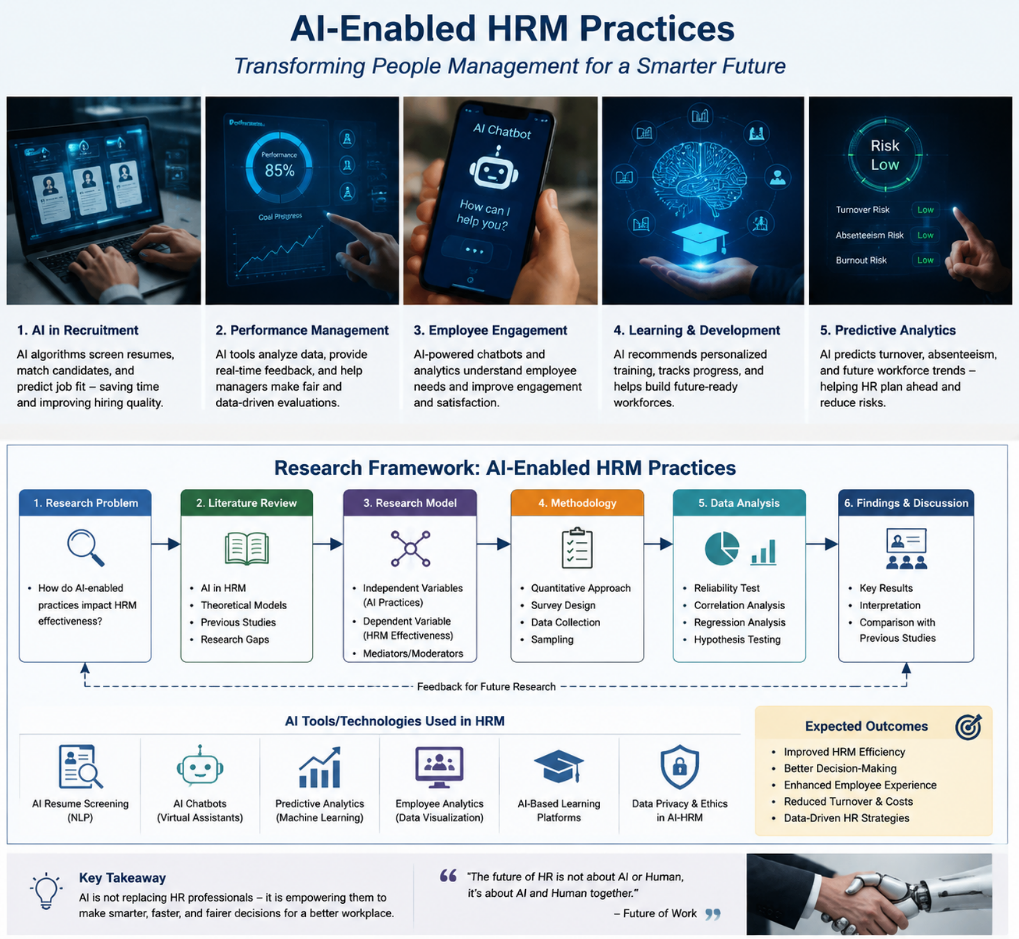
As part of my research on AI-enabled HRM practices, I analyzed responses from employees about technology adoption in HR. At first, the data looked like nothing more than rows of numbers. With guidance from my supervisors and continuous practice, those numbers started telling stories—stories about how employees feel about AI, how organizations are adapting to digital transformation, and how technology can support, rather than replace, human decision-making.
One aspect of studying at Yanshan University that impressed me most was the support provided by faculty members. Professors encourage students to think independently while offering constructive feedback throughout the research process. Rather than giving direct answers, they guide students toward finding their own solutions, helping them become more confident researchers.
The university also provides access to modern research facilities, digital libraries, international journals, and academic resources that are essential for postgraduate study. These resources allow students to explore global research and develop work that meets international academic standards.
Another valuable part of the experience has been learning alongside students from different countries. Classroom discussions often include different cultural and professional perspectives, making every conversation an opportunity to learn something new. These exchanges have broadened my understanding of global workplace practices and reminded me that business challenges rarely have a single solution.
Studying in China has also changed the way I think about education itself. Research is not treated as a final requirement to complete a degree. It is viewed as a continuous process of curiosity, critical thinking, and innovation. Students are encouraged to question existing ideas, test new ones, and contribute knowledge that may benefit society.
This approach has transformed my confidence as both a student and an HR professional. I no longer see research as something reserved for academics. I now understand that research helps solve practical business problems and prepares students to make informed decisions in their careers.
Looking back, choosing Yanshan University was about much more than earning an MBA. It introduced me to a research culture that values innovation, collaboration, and lifelong learning. It challenged me to think beyond textbooks and encouraged me to explore one of the fastest-growing areas in modern management—Artificial Intelligence in Human Resource Management.
My research journey is still continuing, but one lesson has already become clear: good research is not about finding easy answers. It is about asking meaningful questions, remaining curious, and never stopping the search for better solutions.
For me, that has been the greatest lesson of studying at Yanshan University.