



Concerns arise as exports drop to $30.8 billion compared to $32.1 billion last year; rice exports increased from $321 million to $394 million, with emergency measures recommended to enhance competitiveness.
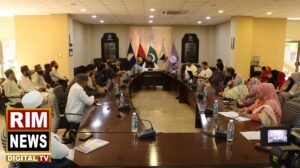
Islamabad (Izhhar Khan Niazi) – The National Assembly’s Standing Committee on Commerce held a meeting chaired by Mohammad Javed Hanif Khan at the Parliament House in Islamabad, where a detailed review of enhancing national exports, trade reforms, increasing competitiveness, and the obstacles faced by the export sector was conducted. The committee emphasized that trade policies determined in consultation with stakeholders should be implemented without unnecessary delays, transforming them from mere paperwork into practical actions.
The committee considered the third amendment bill for trade organizations presented by Mohammad Farooq Sattar. Members expressed principled support for the proposed amendments but referred the matter to the Ministry of Commerce and the Ministry of Law and Justice for legal opinion and assessment of potential legal implications before making a final decision.
During the meeting, progress on previous recommendations regarding subsidies for the rice sector was reviewed, and the increase in rice exports was deemed encouraging. The committee was informed that rice exports had risen from $321 million to $394 million by August 30, 2026. The committee stated that the improved performance of a single sector must be transformed into a broad and sustainable export strategy, requiring focus on research, better seed varieties, value addition, and enhancing competitiveness in the global market.
The committee also expressed serious concerns over the decline in overall national exports. Members reported that exports had fallen to $30.8 billion this year compared to $32.1 billion last year. The committee questioned why effective measures were not being taken to maintain Pakistan’s market share in the face of increasing competitive pressure in the global market due to subsidies provided by regional countries.
The committee raised questions about the performance of the current system for trade promotion and facilitation, emphasizing the need for better coordination among institutions. Members stated that Pakistan must create an environment where domestic businesses and industries can effectively compete in the global market, rather than merely discussing trade facilitation. The meeting also considered the digital transformation of the Trade Development Authority of Pakistan and measures for facilitating trade.
A detailed discussion was held on the import of sugar and its subsequent disposal or settlement. The committee sought further clarification on the policy for importing sugar, its financial implications, and its impact on food security.
The committee concluded that to increase exports, simultaneous attention must be given to all factors including quality, approval, pricing, quantity, and industrial competitiveness. A proposal was also made to convene relevant ministries and the Federal Board of Revenue together to address the obstacles faced by export industries.
The standing committee stressed the need to formulate effective policy guidelines for industrial development, value addition, and diversification of export products. The committee directed that special and focused policy measures be taken by identifying a few high-potential products and sectors with significant export and employment potential.