




Islamabad (News Reporter)
The All Pakistan Private Schools and Colleges Association has expressed concern over the results of the annual ninth-grade examinations 2026 in Punjab, stating that the results from all nine educational boards in the province require immediate measures to improve educational standards, examination systems, and students’ basic educational capabilities.
According to the association, the overall pass rate in the results released on September 2 was not encouraging, while students from private and affiliated institutions performed better compared to public institutions in several boards. Central President Dr. Abrar Hussain Malik stated that the pass rate for public institutions in the Rawalpindi Board was 30.82 percent, while the rate for private affiliated institutions was 60.41 percent. In the Gujranwala Board, the pass rate for public institutions was 39.59 percent, compared to 69.71 percent for private and non-government institutions. He emphasized the need for a comprehensive and impartial comparative analysis of the results to identify educational weaknesses.
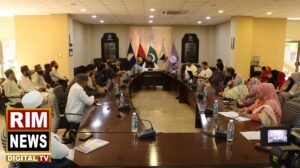
He mentioned that private educational institutions, despite limited resources, are providing education to millions of children, and the government should consider the services, experiences, and issues of the private sector in policy-making. The association will continue its role in improving educational standards, teacher training, modern teaching methods, and enhancing students’ capabilities. On this occasion, Secretary General Muhammad Ashraf Haraj, Vice President Javed Iqbal, Punjab Patron Chief Raja Zahoor-ul-Haq, Central Executive Council member Intikhab Hussain, Malik Din Muhammad Awan, Israr Shah Bukhari, General Secretary Punjab Sajid Ilyas Chaudhry, President Rawalpindi Division Irfan Muzaffar Kiani, District President Rawalpindi Abdul Hafeez Malik, District President Chakwal Safdar Malik, education expert and District President Attock Tahir Khan Durrani, Muhammad Ibrahim, Sardar Gul Zubair Khan, Chaudhry Arshad Mahmood, Asghar Khan from Mianwali, Professor Khurshid Ahmed from Jhelum, Haji Zakaullah Khattana from Gujrat, Talha Mahmood Sindhu from Faisalabad, Naeem Awan from Sargodha, Khalid Chadhar from Jhang, Syed Rashid Hussain from Multan, Afzal Sahi from Sahiwal, Makhdoom Khalid Mahmood from Kasur, Sohail Anjum Gondal from Toba Tek Singh, Khalid Mahmood from Mandi Bahauddin, and Chaudhry Jehanda from Bahawalpur, along with officials from across Punjab, also shared their views on the results. The leaders stated that to improve educational standards, a joint strategy must be adopted by the government, teachers, parents, and private educational institutions, while special reform programs should be initiated in districts and institutions with low results. They congratulated the successful students, parents, and teachers, encouraging the unsuccessful students, stating that one examination does not determine a student’s future. The officials demanded that the government provide adequate representation for private educational institutions in educational policy-making so that their experiences and services can be effectively utilized.
…………………………………………..